
Upgrade Your Air Filtration
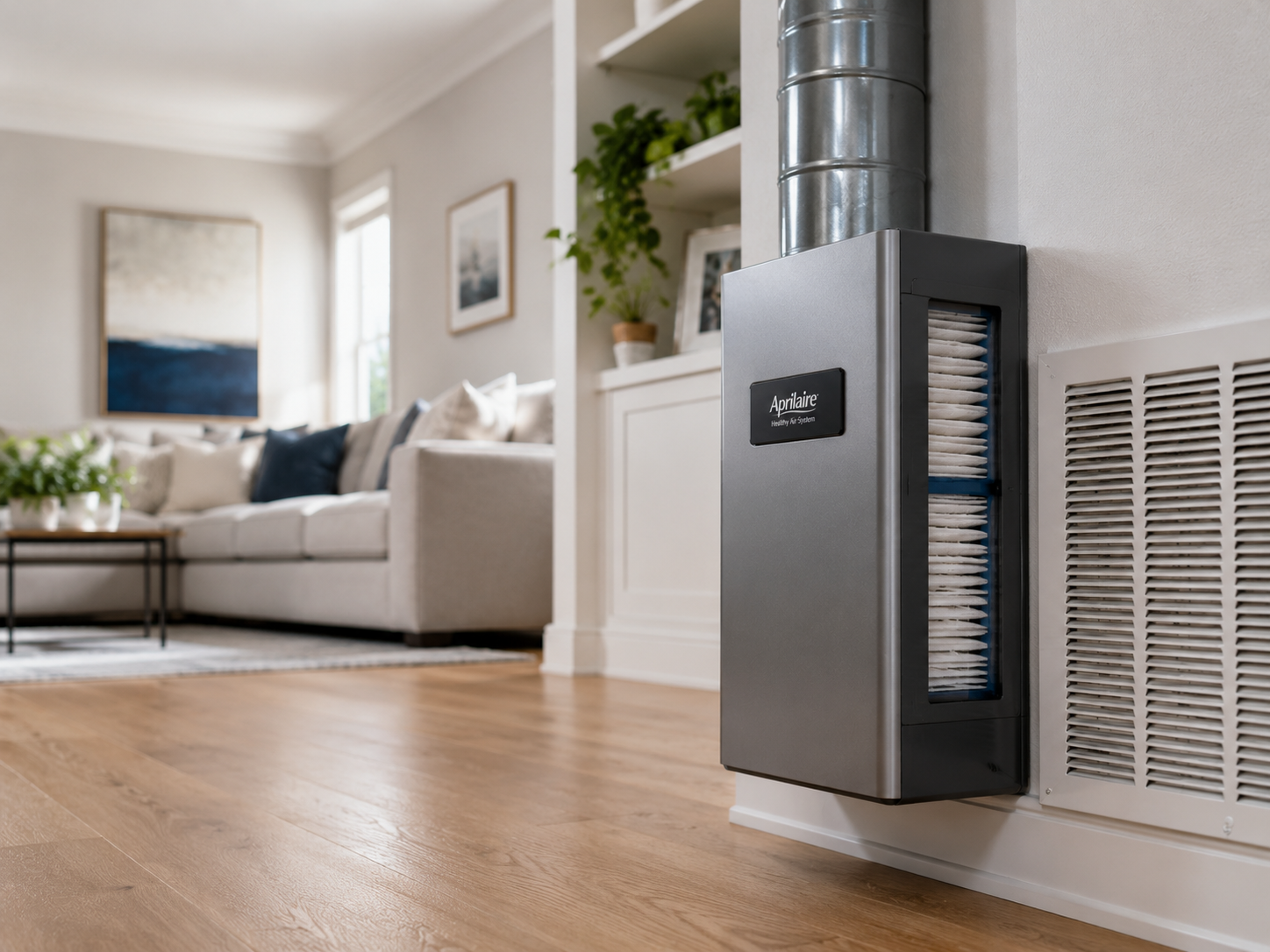
The standard fiberglass filters that come with most HVAC systems capture only the largest particles. Upgrading to a pleated filter with a MERV rating of 8 to 13 can significantly reduce dust, pollen, pet dander, and other airborne contaminants. For homeowners with allergies or respiratory concerns, a whole-home electronic air cleaner or HEPA filtration system provides an even higher level of purification.
Control Humidity Levels
Northern Idaho winters are dry, which can cause respiratory irritation, static electricity, and damage to wood floors and furniture. A whole-home humidifier integrated with your HVAC system maintains optimal humidity levels between 30 and 50 percent throughout your entire home. In summer, if humidity becomes a problem, a dehumidifier can prevent mold growth and improve comfort.
Consider UV Air Purification
UV-C germicidal lights installed inside your ductwork neutralize bacteria, viruses, and mold spores as air circulates through your HVAC system. This technology has been used in hospitals for decades and is now affordable for residential applications. It is especially valuable during cold and flu season and for households with immunocompromised family members.
Schedule Regular HVAC Maintenance
A well-maintained HVAC system does a better job of filtering and circulating air. Dirty coils, clogged drains, and worn components reduce system efficiency and can contribute to poor air quality. Semi-annual maintenance from a licensed technician keeps your system clean and operating at its best.
Ventilate Your Home Properly
Tight home construction is great for energy efficiency but can trap stale air and pollutants inside. An energy recovery ventilator (ERV) exchanges stale indoor air with fresh outdoor air while recovering the energy used to heat or cool it. This provides fresh air ventilation without the energy penalty of opening a window in January.